
FASCIAL MANIPULATION®
PAIN ISN'T ALWAYS WHERE THE PROBLEM IS.
A whole-body approach designed to identify and treat fascial restrictions that may be affecting movement, force transmission, and pain.

WHAT IS FASCIA?
YOUR BODY IS CONNECTED.
Fascia is a continuous network of connective tissue that surrounds and connects muscles, joints, nerves, and organs throughout the body. It plays an important role in movement, force transmission, and proprioception—your body's ability to sense and control movement.
Because fascia is continuous, dysfunction in one area may influence how force and movement are managed somewhere else in the system.
THE PAINFUL AREA MAY BE PART OF THE PROBLEM.
IT MAY NOT BE WHERE THE PROBLEM STARTED.
WHAT IS A FASCIAL DENSIFICATION?
WHEN FASCIA STOPS GLIDING EFFICIENTLY.
Healthy fascial tissue is designed to allow layers of tissue to glide and move efficiently. Changes within the extracellular matrix of the fascia can alter this gliding behavior and create areas of increased stiffness known as densifications.
These restrictions may affect movement, proprioception, and the way force is transmitted through the body. Over time, the body may begin compensating around these areas, placing greater stress on other tissues and regions.
THIS IS WHY TREATING ONLY WHERE IT HURTS MAY NOT CREATE LASTING CHANGE.
HOW FASCIAL MANIPULATION® WORKS
THE STECCO METHOD
A SYSTEM BUILT AROUND THE FASCIA.
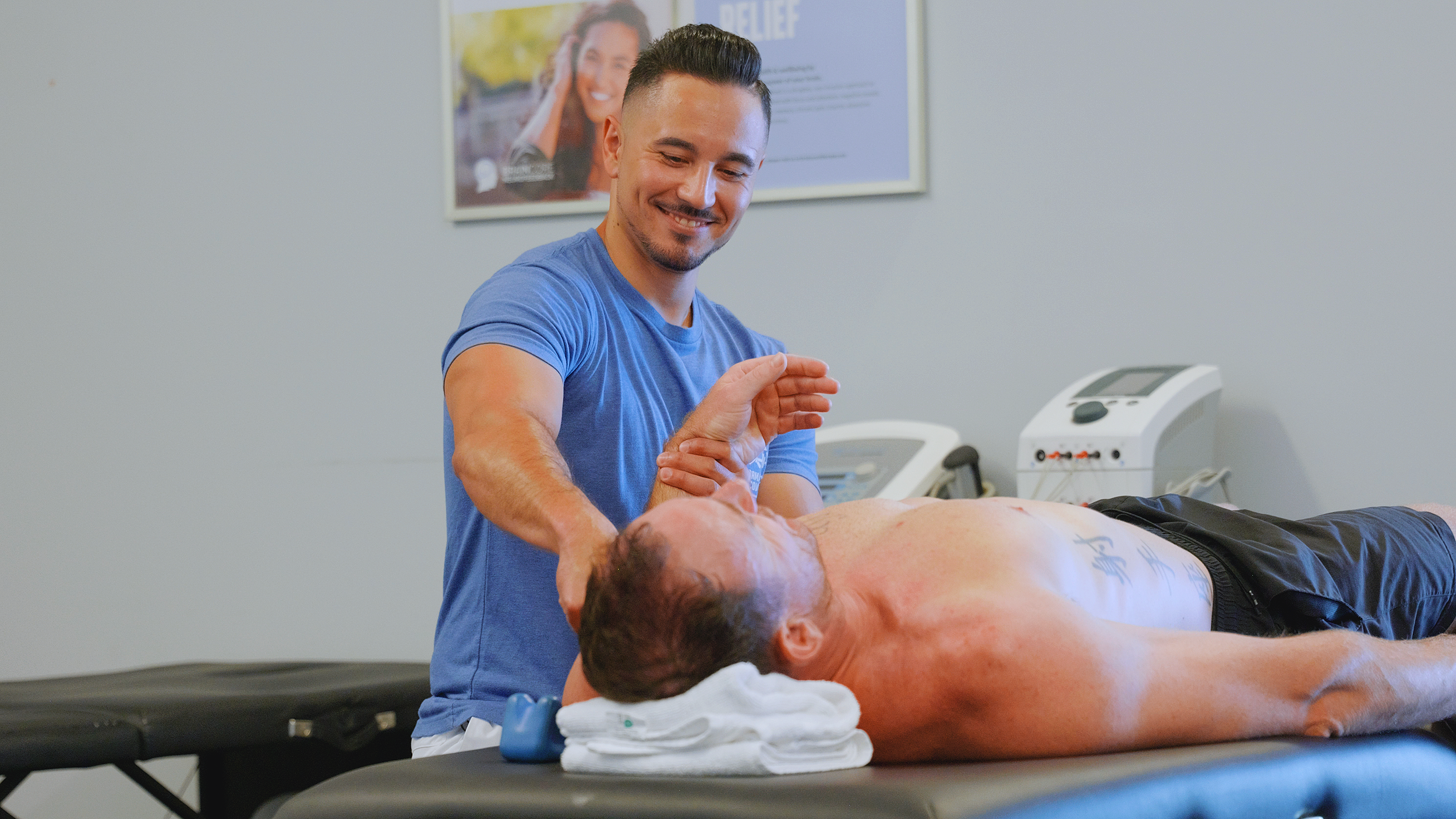
Fascial Manipulation® is a specific manual therapy method developed by Italian physiotherapist Luigi Stecco and advanced through the anatomical and scientific work of the Stecco family.
Unlike techniques that simply focus on the painful or tight area, the Stecco Method uses a structured assessment of your history, movement, and fascial system to identify specific areas of dysfunction that may be contributing to the problem.
The body is evaluated globally. Treatment is targeted. Every point treated has a reason.
ASSESS THE SYSTEM. TREAT WHAT MATTERS.
01
ASSESS
Your history and movement patterns help identify where dysfunction may exist within the fascial system—not simply where you're experiencing pain.
02
IDENTIFY
Specific areas of fascial restriction are evaluated to determine which points may be influencing your movement and symptoms.
03
TREAT
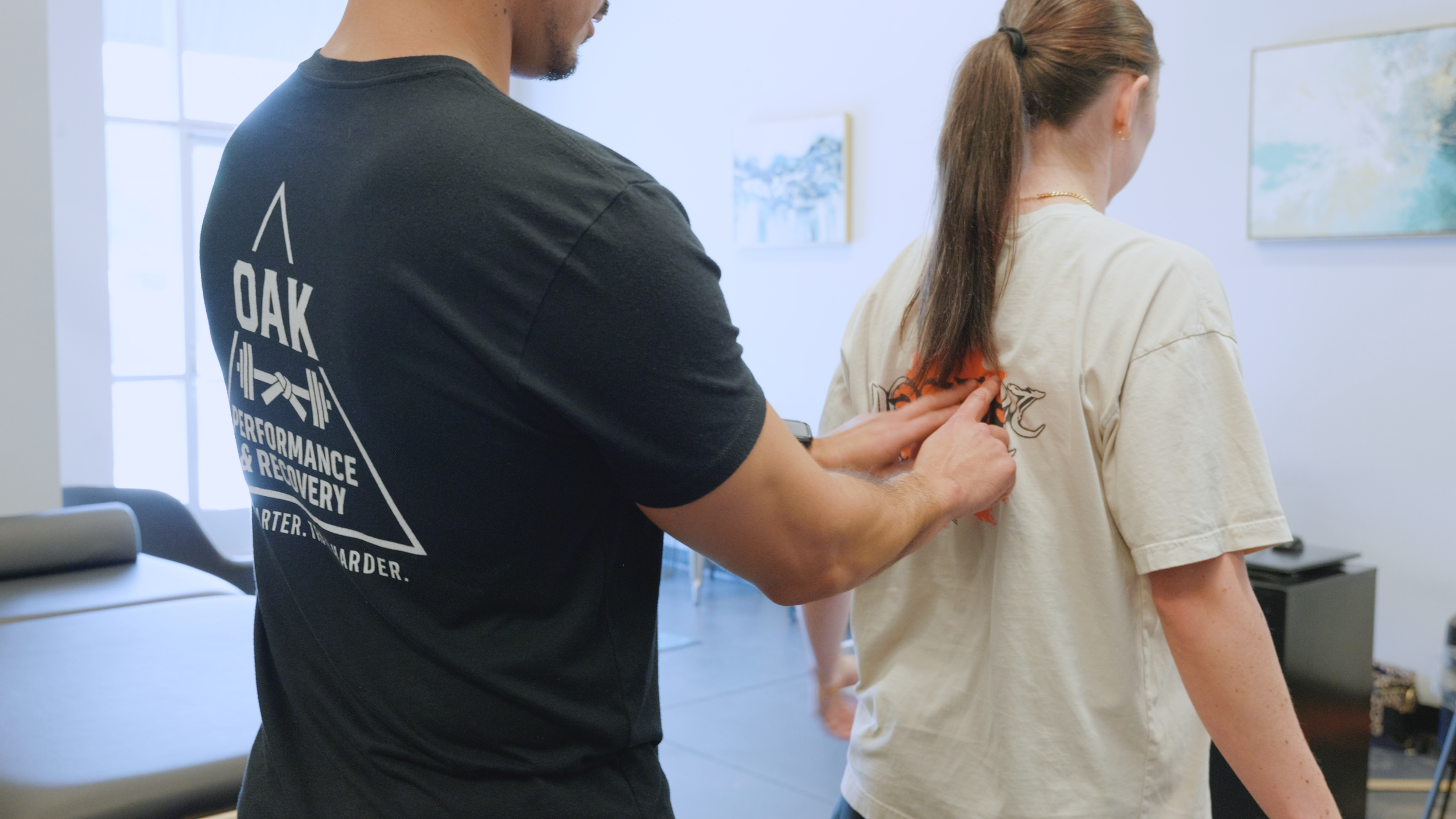
Targeted friction and shear are applied to the involved fascial tissue to improve tissue gliding and restore more efficient movement within the system.
The goal isn't to treat every painful or tight area.
The goal is to identify and address the restrictions that appear most relevant to the dysfunction.

WHY THIS APPROACH IS DIFFERENT
PAIN IS INFORMATION.
NOT ALWAYS THE ANSWER.The area where you feel pain may be the tissue currently under the greatest stress. But that doesn't necessarily mean it's the only area contributing to the problem.
Your history, movement assessment, and tissue findings are used to identify patterns throughout the fascial system that may help explain why certain areas continue becoming overloaded.
TREAT THE SYSTEM. NOT THE SYMPTOM.
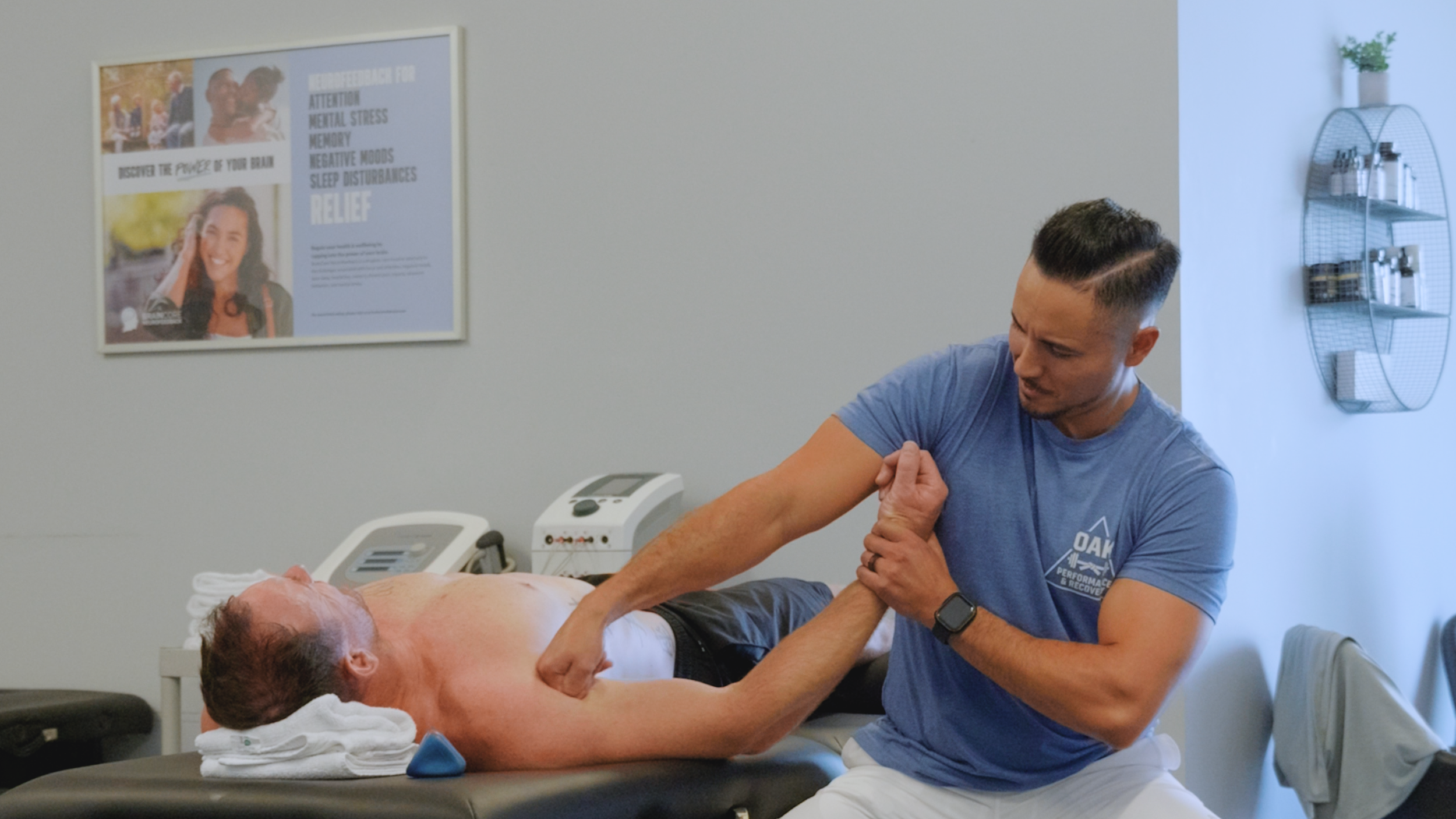
Fascial tissue is richly innervated with sensory nerve endings. When a densified area is treated, the targeted shear and friction used during Fascial Manipulation® can create a distinct, sharp sensation.
As the area is treated, patients often notice the intensity begin to decrease. Treatment is continually reassessed and adjusted based on the tissue and your individual response.
MANY PERCEIVE A PRODUCTIVE TYPE OF PAINYES. TREATMENT CAN BE INTENSE.
INTENSE DOESN'T MEAN RANDOM.

HANDS-ON TREATMENT IS THE START.
NOT THE FINISH.
Fascial Manipulation® is a powerful part of the process, but improving movement is only the beginning.
Once restrictions are addressed, we use mobility, strength, control, and performance-based exercise to help your body adapt to the demands of your sport, job, training, and life.
The goal is not to make you dependent on treatment. The goal is to create an opportunity for better movement, then build the capacity to use it.